Are you thinking about learning SEO but feel overwhelmed by all the technical terms and strategies? Don’t worry — this guide will help you understand the basics in a simple and clear way. Whether you’re a student, a business owner, or just curious about digital marketing, understanding SEO can open up big opportunities for your career or personal brand. Let’s explore the key concepts that are covered in a standard SEO course.
1. What is SEO and Why It Matters
SEO stands for Search Engine Optimization. It’s the process of improving your website so that it shows up higher in search engine results (like Google, Bing, or Yahoo). When someone searches for something online, they usually click on one of the first few results. That’s why every business and website owner wants to appear at the top of the search results.
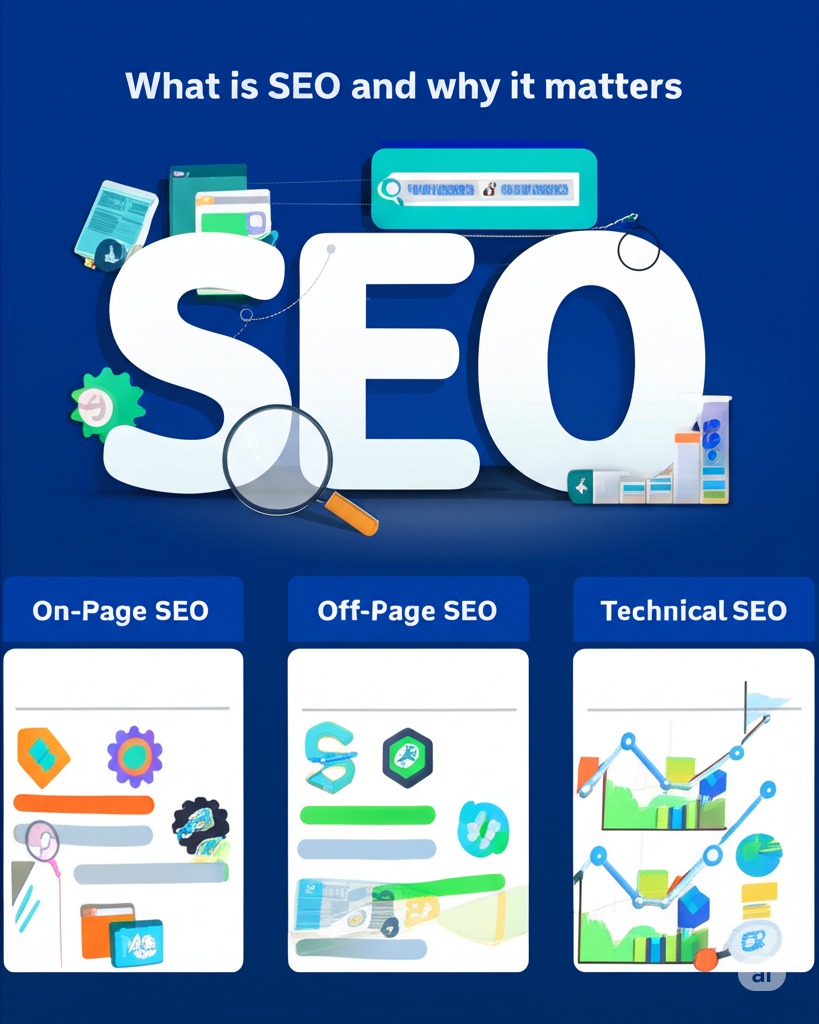
Why does SEO matter?
- More visibility: Higher rankings mean more people find your website.
- Free traffic: Unlike paid ads, SEO brings free (organic) traffic.
- Trust and credibility: People trust Google. If Google shows your website on the first page, it builds trust with users.
- Better user experience: Good SEO includes improving page speed, mobile friendliness, and content — making users happy.
2. Search Engines 101: How Google Works
Before doing SEO, it’s important to understand how Google and other search engines work. Here’s a simple explanation:
Step 1: Crawling
Google sends out robots (called crawlers or spiders) to explore the web. These bots read the content of websites and follow links from one page to another.
Step 2: Indexing
After crawling, the information is stored in Google’s database, called the index. Think of it like a huge digital library.
Step 3: Ranking
When someone searches something, Google uses complex algorithms to rank which pages are most useful and relevant. These rankings are based on hundreds of factors, like keywords, backlinks, and website quality.
👉 So, SEO is all about making your site easy for Google to crawl, index, and rank!
3. Types of SEO: On-Page, Off-Page & Technical
An effective SEO strategy includes three main types of optimization. Each one focuses on a different part of
our website or marketing.
a) On-Page SEO
This refers to optimizing what’s on your website — your content, structure, and code.
Key areas of On-Page SEO:
- Using the right keywords in your content
- Writing title tags and meta descriptions
- Creating high-quality, useful content
- Optimizing images (size, alt text)
- Using internal links (links between your website pages)
b) Off-Page SEO
This refers to the actions you take outside of your website to improve its search engine ranking.
Key Off-Page SEO strategies:
- Backlinks (getting links from other websites to your site)
- Social media sharing
- Guest posting on other blogs
- Building trust and domain authority
Think of backlinks as votes — the more high-quality websites that link to you, the more trustworthy your site looks to Google.
c) Technical SEO
This focuses on the backend of your website — how it’s built and how well it performs.
Important technical factors:
- Website speed (fast-loading pages)
- Mobile-friendliness
- Secure connection (HTTPS)
- Fixing broken links
- Creating a sitemap and robot.txt file
- Clean URL structure
Technical SEO helps search engines understand your site and improves the user experience.
4. Key SEO Terms: Keywords, SERP, Backlinks & More
When you learn SEO, you’ll come across certain important words again and again. Let’s look at some of the most common ones:
✅ Keyword
A keyword is the word or phrase that people type into a search engine. For example, if someone types “best laptops under ₹50,000,” that’s a keyword.
You use these keywords in your content so that Google knows what your page is about.
✅ SERP
SERP stands for Search Engine Results Page — the page you see after searching something on Google.
The goal of SEO is to get your website listed at the top of the SERP. It includes:
- Paid ads at the top
- Organic search results (SEO)
- Featured snippets (Google’s highlighted answer boxes)
✅ Backlink
A backlink is when another website links to your page. It’s like a recommendation. The more quality backlinks you have, the better your site’s authority and ranking.
✅ Alt Text
This is a description you add to images on your site. It helps Google understand what the image is and improves accessibility.
✅ Meta Title & Meta Description
These are short summaries that appear on the SERP. A meta title is the clickable headline, and a meta description gives a brief summary. Both affect how many people click on your link.
🎯 Final Thoughts: Why You Should Learn SEO
Learning SEO might seem technical at first, but once you understand these basics, it becomes much easier — and even exciting. A good SEO course will walk you through all these areas with live examples, tools, and hands-on practice.
SEO is not just about Google rankings. It’s about:
- Understanding your audience
- Building a strong online presence
- Attracting traffic without spending money on ads
So, if you’re planning to start a blog, a business, or a career in digital marketing — SEO is a must-have skill.
✅ Call to Action:
👉 Start your SEO journey today. Join a beginner-friendly SEO course, practice what you learn, and start ranking your content on Google. Your future audience is just a search away!