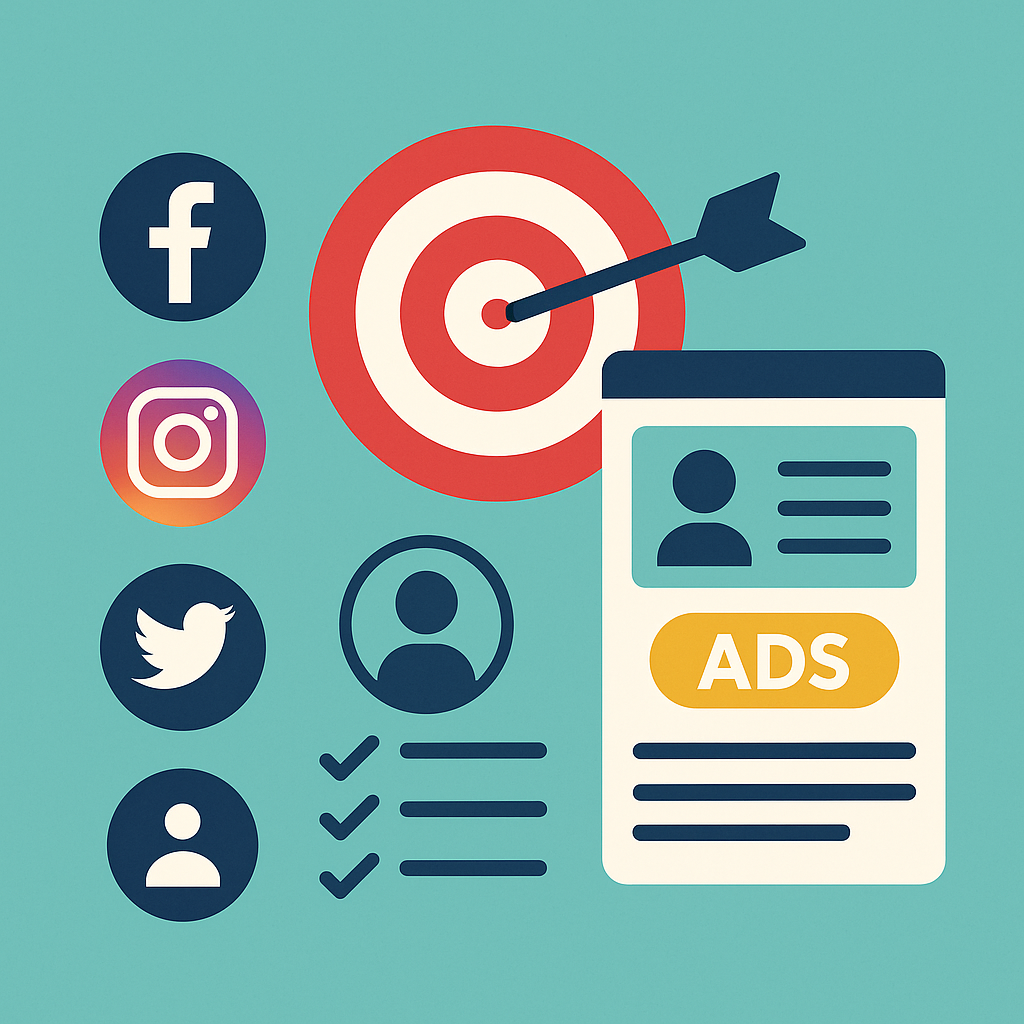
One of the biggest strengths of social media marketing is its ability to show your ads only to the people most likely to care about your business. This is called targeted advertising, and it’s what makes platforms like Facebook, Instagram, LinkedIn, and YouTube such powerful tools for business growth.
Instead of wasting time and money trying to reach everyone, social media allows you to focus your advertising efforts on the right people — those who are most likely to buy from you, use your services, or visit your store.
Let’s explore how this works and why it’s so effective.
🎯 What is Targeted Advertising?
Targeted advertising means you choose who sees your ad. You can set specific filters like:
- Age (e.g., 18–25 or 30–50)
- Gender (male, female, all)
- Location (specific cities, countries, or even neighborhoods)
- Interests (like fitness, travel, food, parenting, technology, etc.)
- Behaviors (people who recently visited your website, watched your video, or clicked on your posts)
This allows you to narrow down your audience and show your content only to people who match your ideal customer profile.
💡 Why Does This Matter?
Think about traditional ads — like newspaper ads, flyers, or TV commercials. You show your message to everyone, hoping the right people will notice. But most of the time, it’s irrelevant to them, and your money is wasted.
In contrast, social media targeting means your ad is laser-focused on the people who are likely to respond — saving money and improving results.
📌 Real-Life Example
Let’s say you own a baby product store. Your main customers are mothers aged 22–40 who live in your city.
Instead of showing your ad to everyone (including students, seniors, and people with no kids), you can set up your Facebook or Instagram ad to target:
- Women
- Ages 22–40
- Parents of children under 5
- Living in your city
This way, your ad shows only to people who fit your customer profile. You’re not wasting money on the wrong audience, and you’re more likely to get real buyers.
🧠 How Targeting Works on Social Media
Most platforms collect user data like:
- What pages you follow
- What posts you like or comment on
- What you search for
- Where you live
- Your relationship status
- Your shopping behavior
You don’t see this data directly, but advertisers use it in the backend to set their audience.
Let’s say someone often likes posts about yoga, healthy food, and wellness. Facebook marks them as someone interested in fitness and self-care. If you sell fitness products, you can create an ad for “people interested in fitness” — and that person will likely see your ad.
📊 Types of Targeting You Can Use
Here are some of the powerful ways you can target your audience on platforms like Facebook and Instagram:
1. Demographic Targeting
Choose audience by age, gender, education, relationship status, job title, etc.
2. Interest-Based Targeting
Target people based on what they like — such as cooking, makeup, gaming, travel, pets, etc.
3. Behavior-Based Targeting
Focus on users who recently clicked ads, visited websites, or bought products online.
4. Location Targeting
Show ads only to people in a specific country, state, city, or even radius around your store.
5. Custom Audiences
Upload your customer email list or target people who have visited your website or app.
6. Lookalike Audiences
Find new people who are similar to your existing customers.
💰 Why It Saves You Money
With traditional ads, you’re paying to reach people whether they’re interested or not. But with targeted ads:
- You get better results with a smaller budget
- You reduce wasted impressions
- You get higher conversion rates (more clicks, calls, purchases)
Even if you only spend ₹200–₹500 per day, targeting ensures you’re reaching the right audience — not everyone.
🛠️ How to Set It Up (Quick Overview)
If you’re running a Facebook or Instagram ad, here’s how it works:
- Go to Meta Ads Manager
- Create a new campaign
- Choose your goal (e.g., website traffic, engagement, sales)
- Define your audience:
- Age range
- Gender
- Location
- Interests/behaviors
- Add your ad creative (image, video, caption, link)
- Set your budget and schedule
Facebook will then show your ad to the audience you selected.
✅ Benefits of Targeted Social Media Ads
- Better return on investment (ROI)
- Reach people who actually care
- Avoid annoying or spamming the wrong audience
- Stay competitive in a crowded market
- Make every rupee count
🧵 Final Example
Let’s go back to our baby store:
You spend ₹300 on a local newspaper ad. Thousands see it — but most are not your target.
Now you run a Facebook ad for ₹300, but only to moms aged 22–40 in your area. These moms see the ad for a new stroller, click the link, and visit your store page. Some even message you to ask about offers.
That’s the power of targeted advertising — maximum results, minimum waste.